
If someone ever decided to devise a course to acquaint the unsuspecting visitor with the general chaos and sensory overload of the Moroccan Medina experience, they will be wasting their time. It is available – for free – every day in Essaouira (pronounced: Essa-weera).
The first-time guest to Morocco will not have the frame of reference to fully appreciate the learning opportunity while it’s actually happening but, a few days later, as the crowds of Marrakech threaten to engulf them, or they get lost (again) in the labyrinthine maze of Fez, an introduction provided by Essaouira’s Medina could change what happens next.
Without this experience, a situation that may only have been seen as something to escape could easily change into something to explore; as an opportunity to embrace the possibilities of what may be found beyond the next wrong turn.
But Essaouira is much more than a training ground.

We had been in Morocco less than 24 hours before hailing a taxi from just inside the Marrakech Medina walls, seeing its driver wedge our bag into a trunk a couple of sizes too small for the purpose, and then race through the morning traffic to the central Marrakech train and bus station.
Essaouira was a three-hour bus ride to the west.
Not knowing what to expect from the first full day of what would be a two-week journey around the country, and with minds still a little jetlag-impaired, we watched from our front row seats as we headed towards the Atlantic coast.
Eventually, a crested hill revealed a sprawling collection of white-washed buildings perched beneath lines of clear blue sky and dark blue ocean.

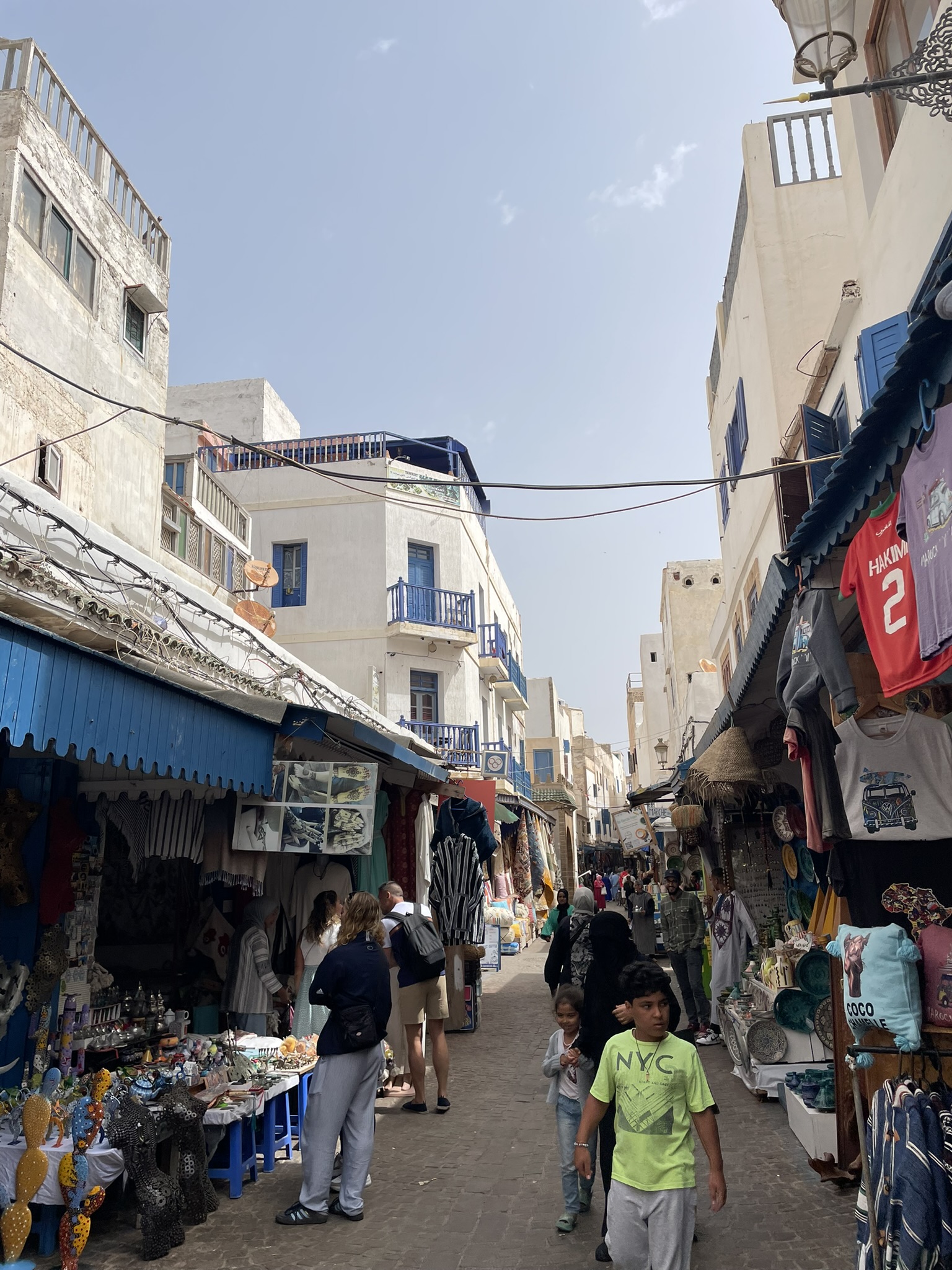
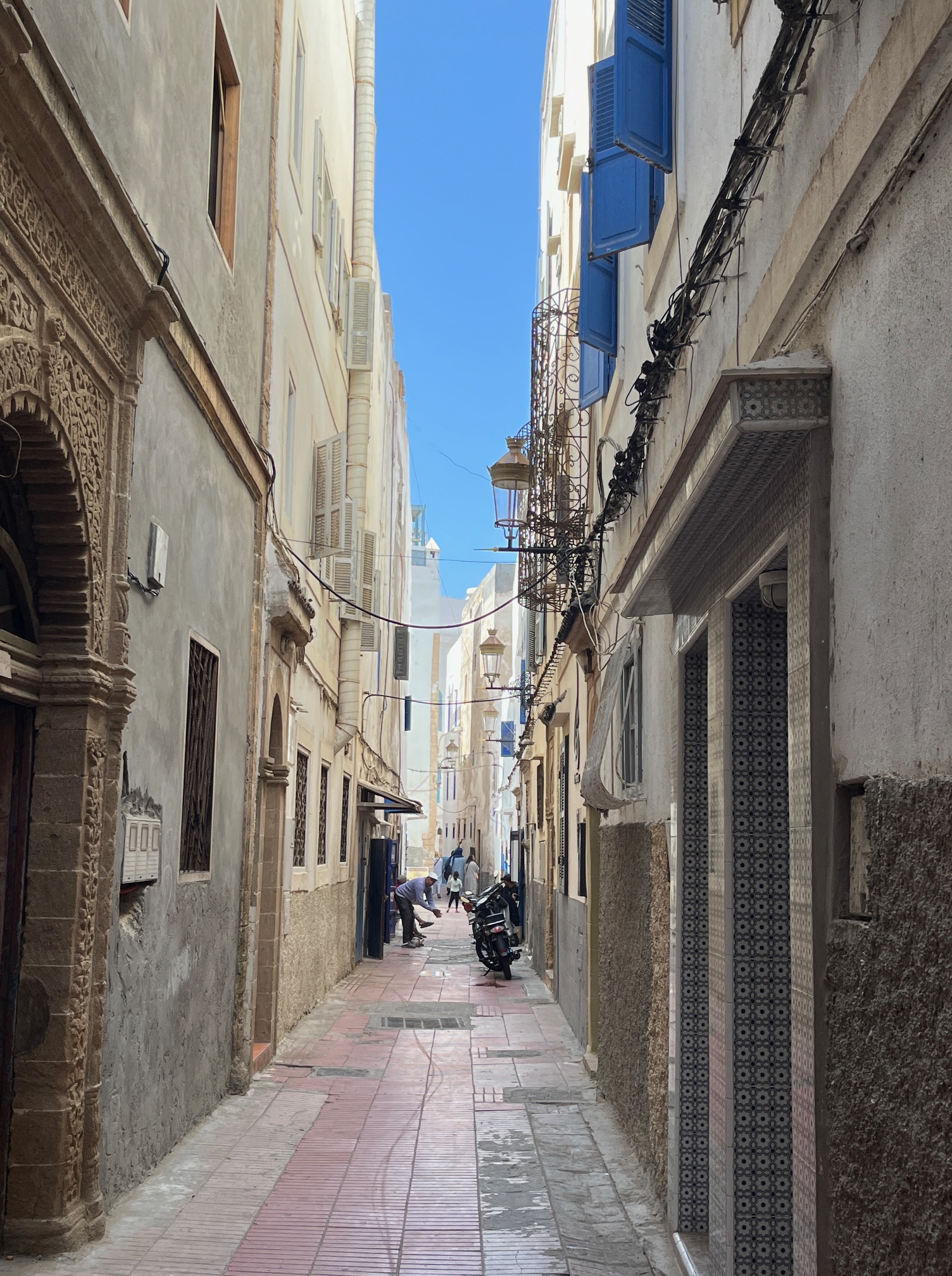
The first steps into a Medina can be intimidating – and Essaouira’s is no different.
Walking through a gate into the Medina, all I saw was a collection of narrow passageways, made more claustrophobic by the high walls of the buildings that rose around them. As we attempted to find our chosen riad, and with increasing desperation, we repeatedly walked up and down the same intersecting passageways; the blue GPS dot that marked our home for the next few days mocking every attempt to step on it.
Matters were not helped by the fact that the riad had no exterior sign. As frustration grew, we called upon the assistance of someone inside a nearby riad that actually had a sign. She pointed us to the door we needed.
By this time, word of our predicament had clearly started to spread among the local population. As we reached for the riad’s door handle, a small crowd had gathered. I’m sure I heard the muffled sound of applause after door closed behind us.
It was only an hour or two later, as we headed into the heart of the Medina, that we realized our initial trepidation was unfounded.
Guided by a paper map provided by our riad’s owner, within ten minutes we were on the main thoroughfare that bisects the Medina – a combination of Avenue de L’Istiqal and Avenue Zerktouni.
With no particular goal in mind we wandered along the street, absorbing the sights, sounds, and general hubbub of the Medina. Gradually, we relaxed into its pace.
We found there is an energy to the Essaouira Medina that is difficult to describe. It is simultaneously invigorating and calming.
There is the high-pitched buzz of mopeds as they weave erratically through the crowds; the slow, contemplative stroll of two old friends; the cart full of screeching chickens heading towards a destination where their day is unlikely to end well; the leather worker at his stall, oblivious to it all, focusing on the next stitch.


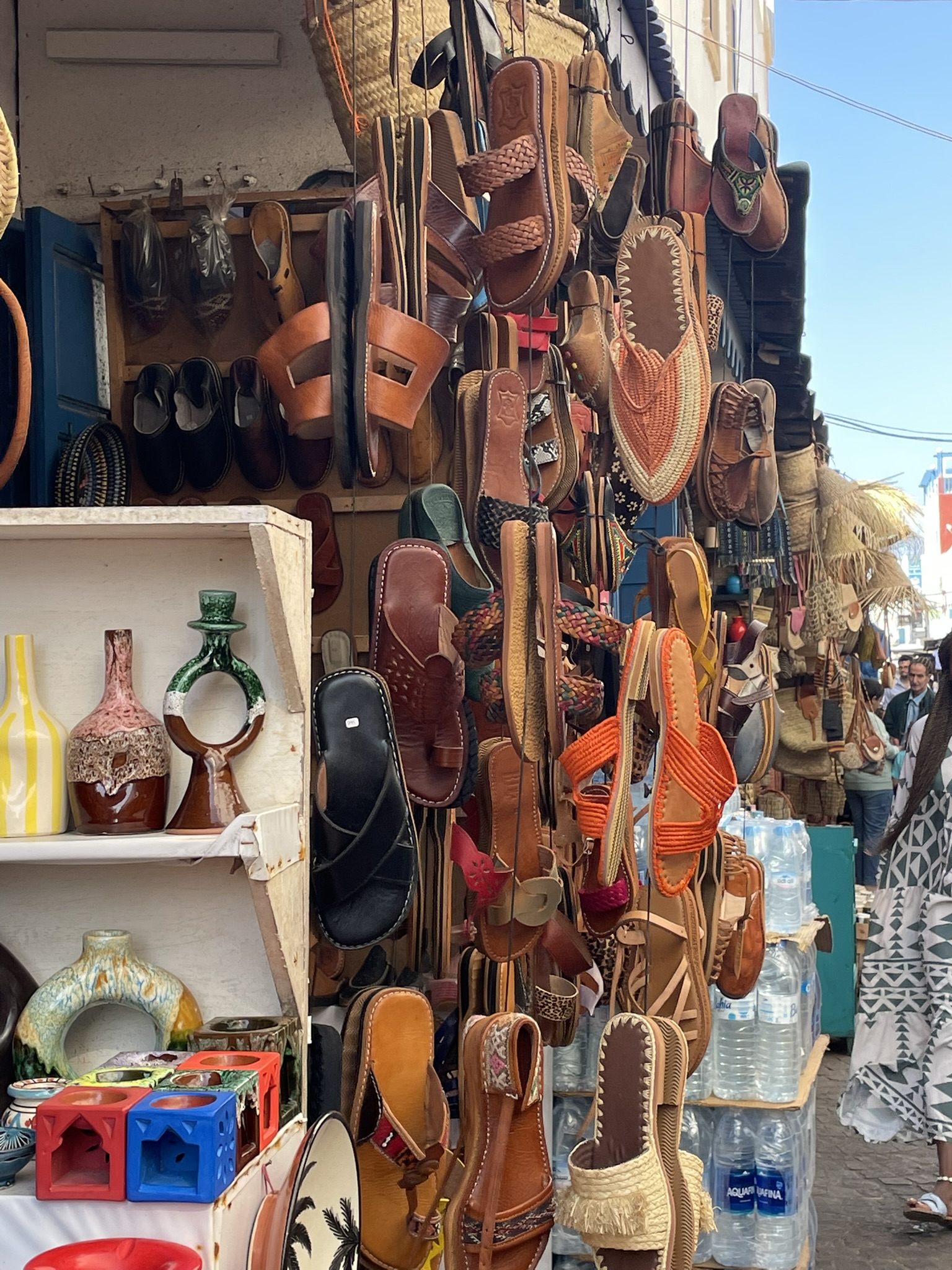
We were enthralled. The Medina is small enough to not be overwhelming, but not so small that it loses its capacity to surprise. It feels as if it begs you to explore.
Eventually, a series of impulsive turns led us to the Skala de la Ville, whose ramparts, replete with cannon, protect the Medina from the crashing Atlantic waves. As you reach the top of the wall and its wide pedestrian walkway, you realize the ramparts also have protected you from something else – the coastal winds.


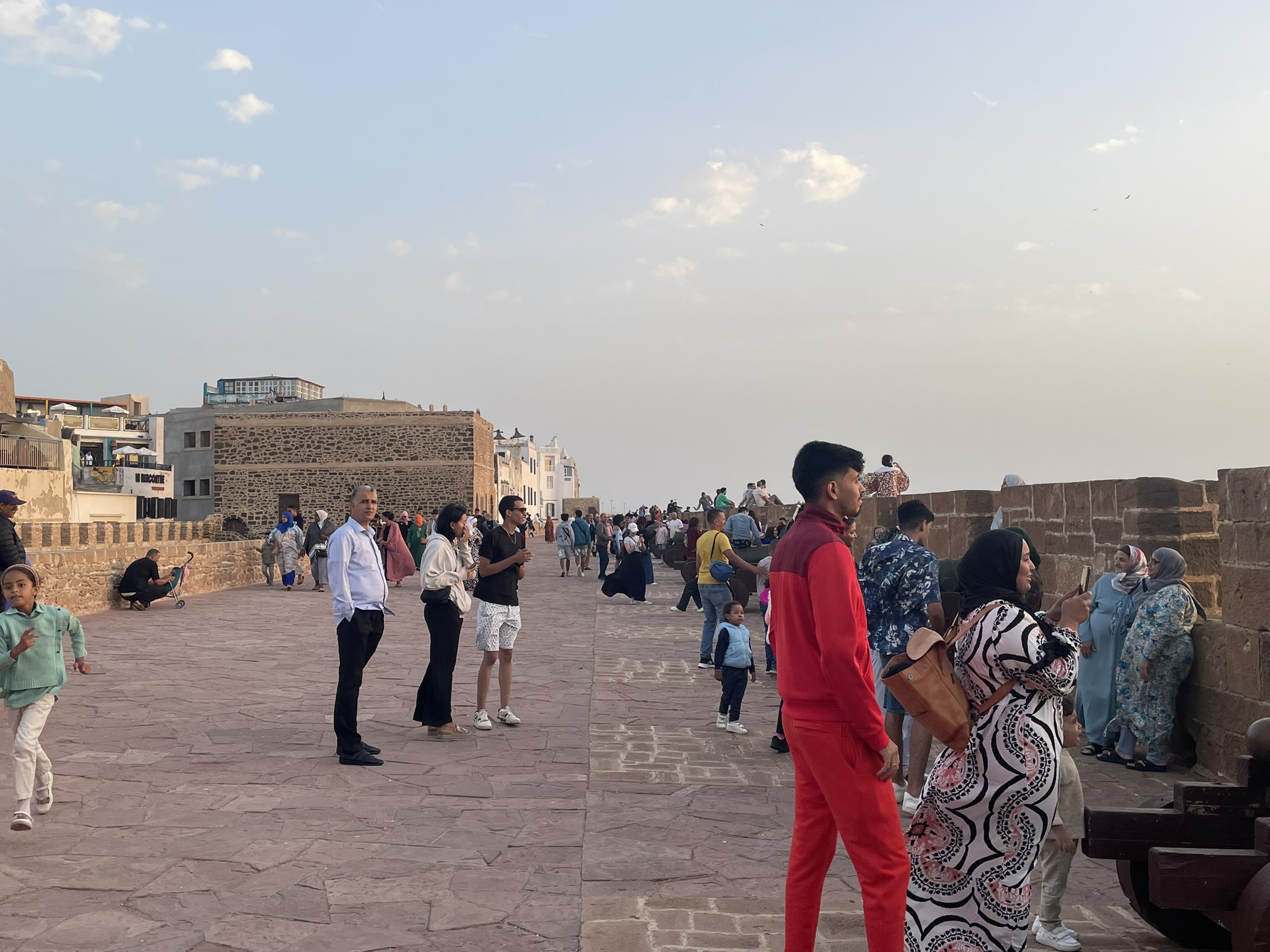
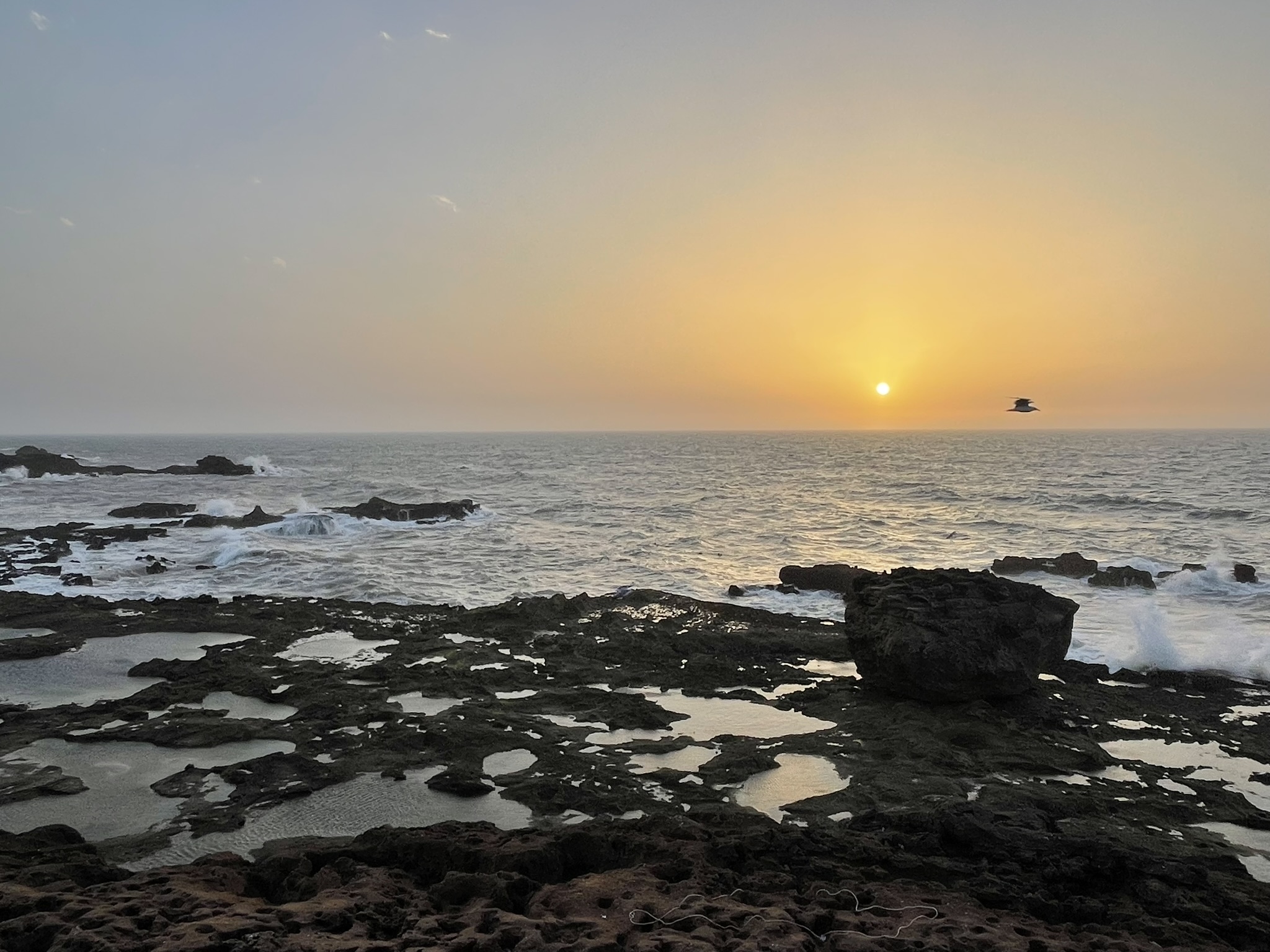
The winds (alizee) in Essaouira are strong. Easing slightly in the early mornings and late evenings, they relentlessly buffet the coast all the way from the Medina’s ocean walls to the port and beach to the south.
I’m sure that, prior to arrival, many visitors have thought that the wide expanse of beach will deliver a welcome respite from the bustle of the Medina and a chance to enjoy a few hours of relaxation.
It does not.
The force that powers the sails of kitesurfers and windsurfers renders sunbathing a painful pursuit – whipping up grains of sand that relentlessly prick at the skin.

Beach soccer also becomes more endurance exercise than sport. Playing into the wind, the strongest goal-bound shots are blown back into play before crossing the goal line. Conversely, a wayward shot in the other direction may be blown for a mile or two before the unfortunate goalkeeper manages to catch up with the ball – and then turns for a lengthy walk back to the game. There’s a lot of stoppage time in Essaouira beach soccer games.
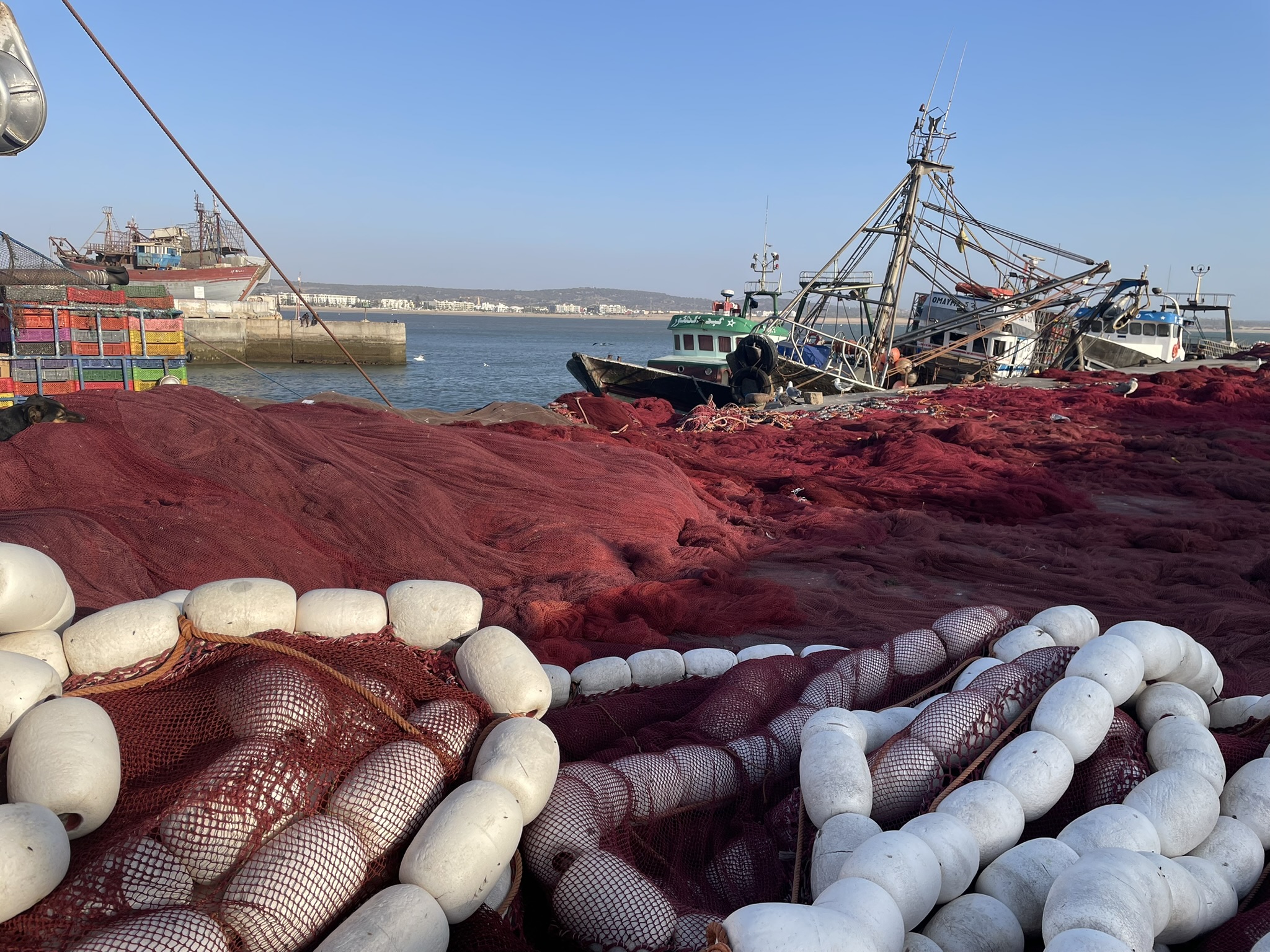
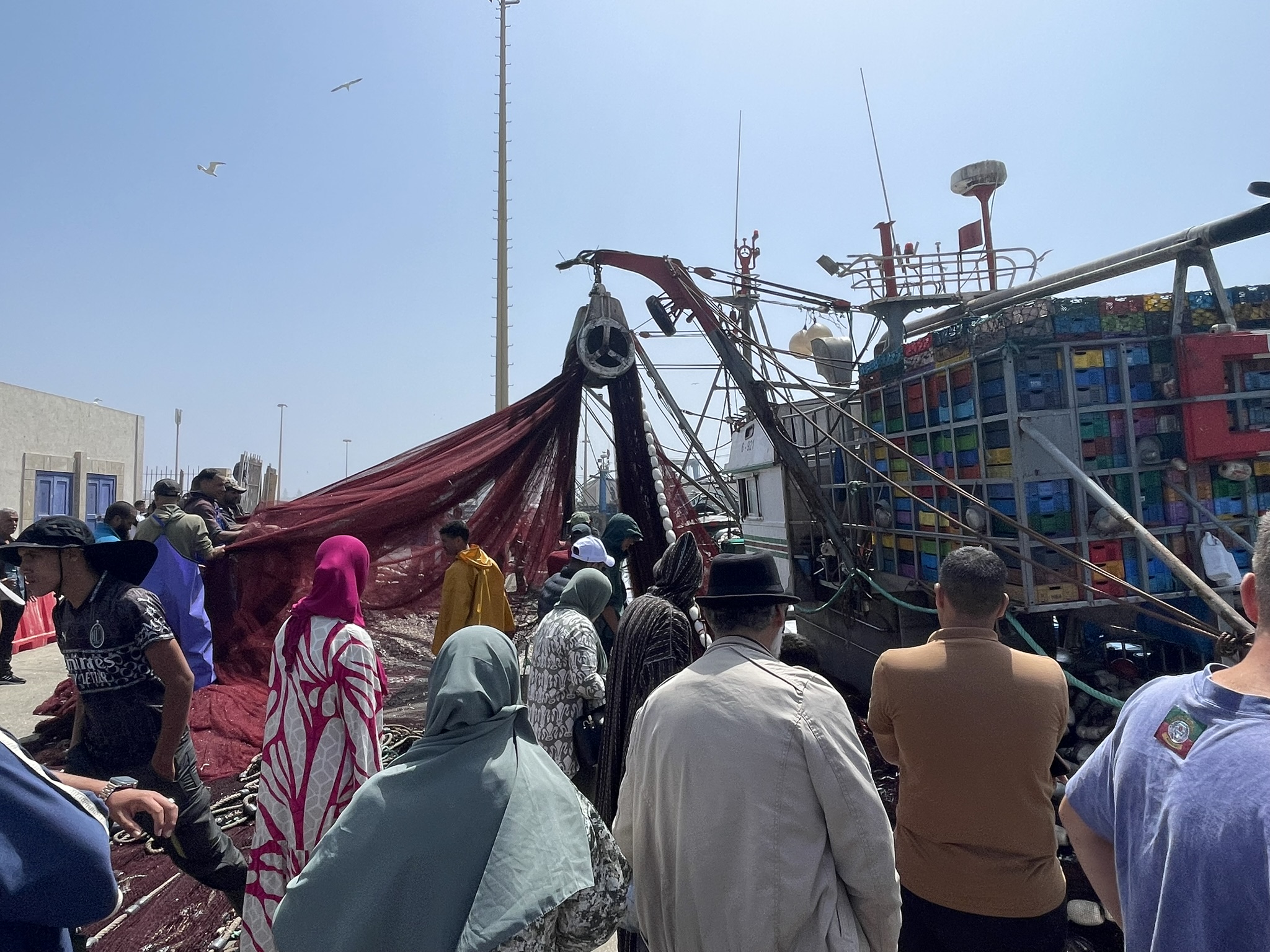
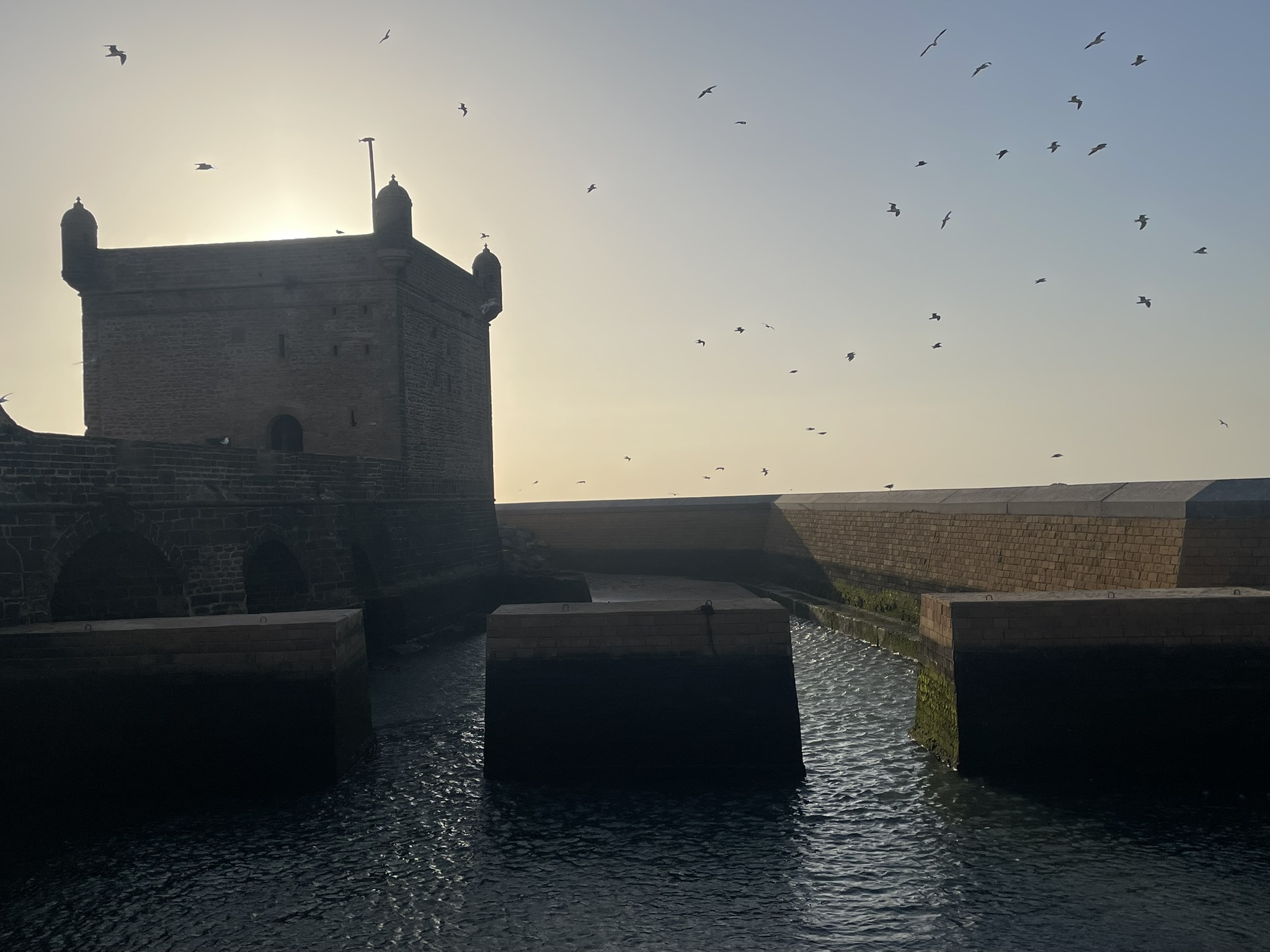
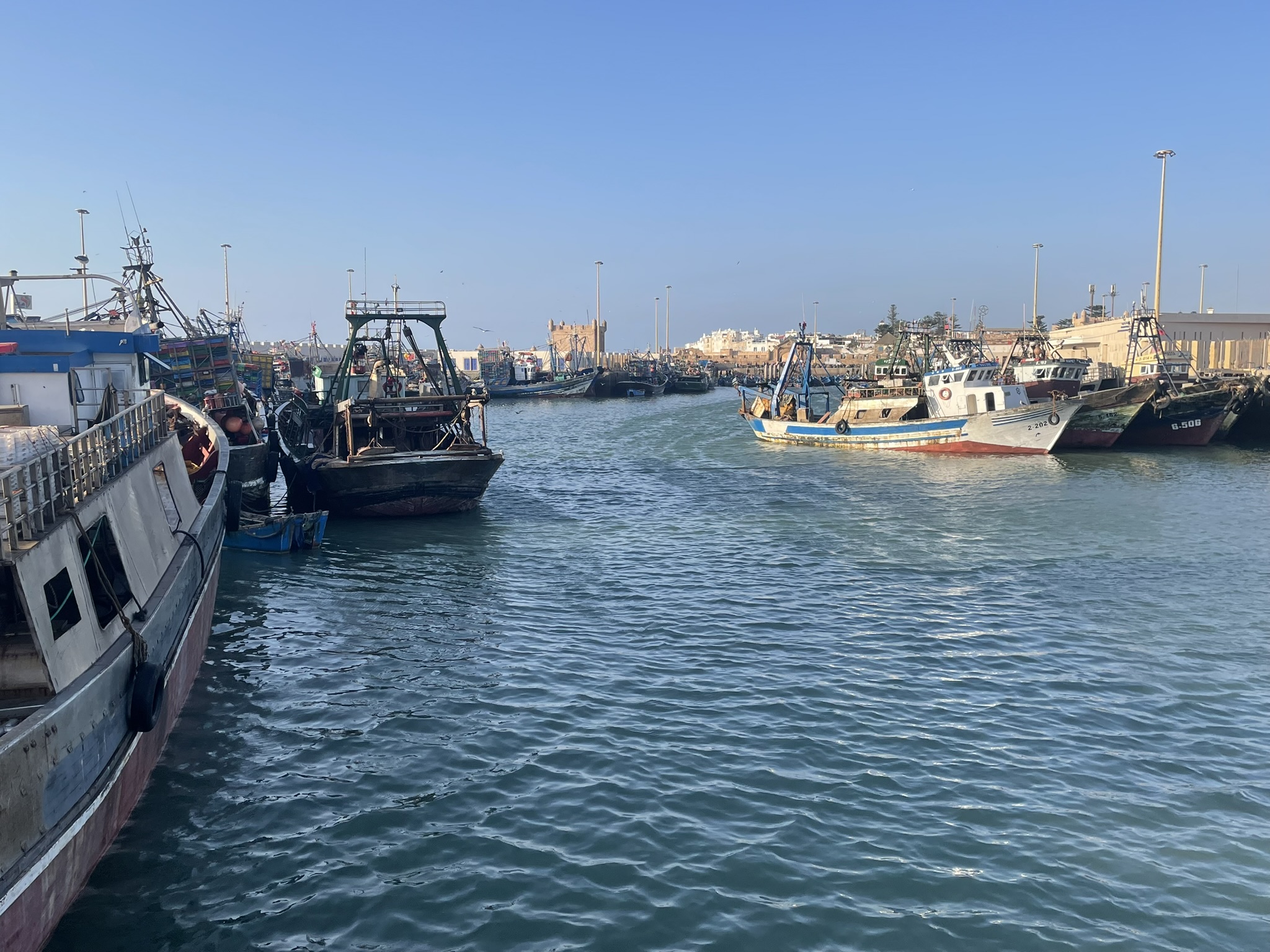
If the Medina is the soul of Essaouira, the port is its beating heart.
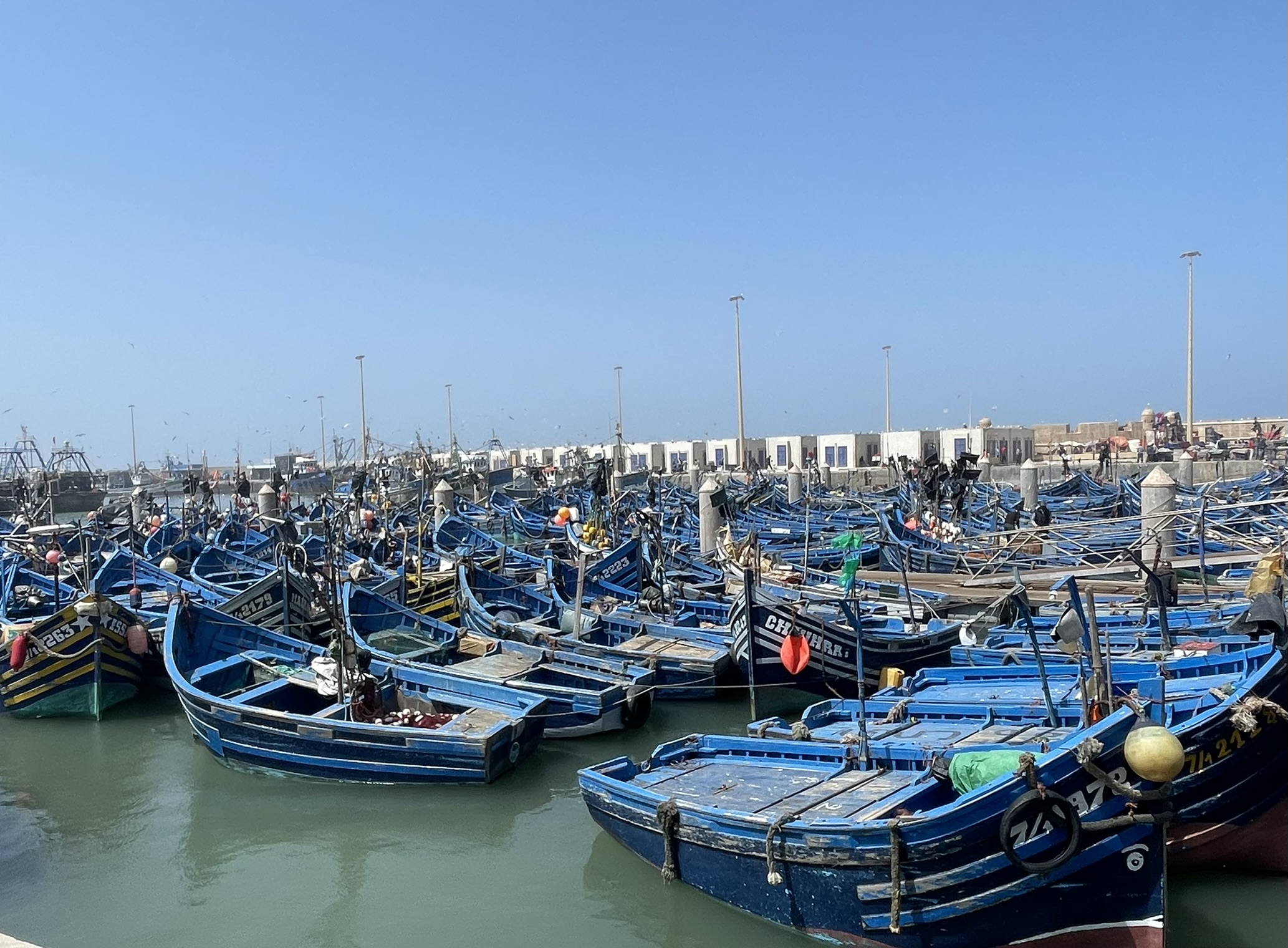
From the hulking tower of Skala du Port to the picturesque rows of tightly-packed blue boats that bob gently in the harbor, the port is a hive of activity. From watching the daily catch arrive, perusing the market stalls that sell it, and pausing at the grill station that will cook your selection, the atmosphere is intoxicating. Yes, it’s pungent and every other step will land in the random remains of what was once a fish, but it is a gloriously authentic experience.

At the beginning of our return journey to Marrakech, after wresting our bag through the front door of the riad I turned to close the door behind us. There on the wall, right next to the door, at eye-level, was a sign that clearly read “Riad des Nomades”. It was a sign that had obviously been there for many years. Two days before, my initial trepidation about the Medina experience had rendered it invisible. Now, its appearance was a metaphor for our few days in Essaouira.
It was only when we relaxed and immersed ourselves into the life of the Medina that we could truly see it.
Nick Orchard
12th January 2025
Practicalities
Getting to Essaouira from Marrakech
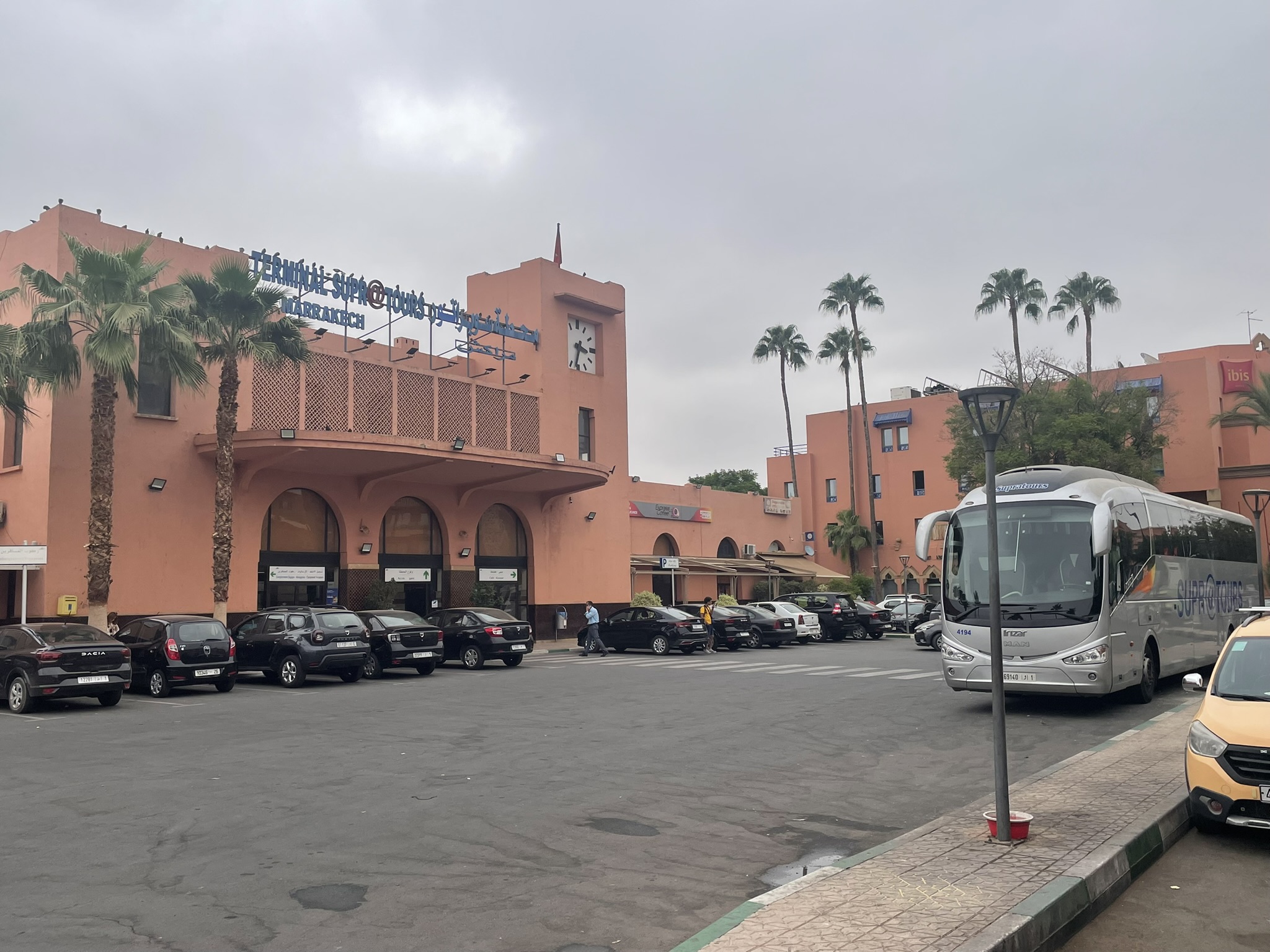
Supratours buses leave from the Marrakech train and bus station six times each day. The journey generally takes three hours. There are no toilets on the bus but, after about two hours, it makes a stop at a roadside café / grocery store. If you have luggage that will not fit under a seat, you’ll need to pay a small fee of MAD5 (USD0.50) per bag. The fee has to be paid at the counter inside the station (to the left of the main entrance), where you’ll receive a tag to put on your bag. Your bag will not be loaded without the tag.
It is highly recommended (often essential) to book your seat in advance. You can do this directly via the Supratours website (French only) or via myticketservices.com. Tickets are slightly cheaper on the Supratours site, i.e., USD10 vs. USD13.
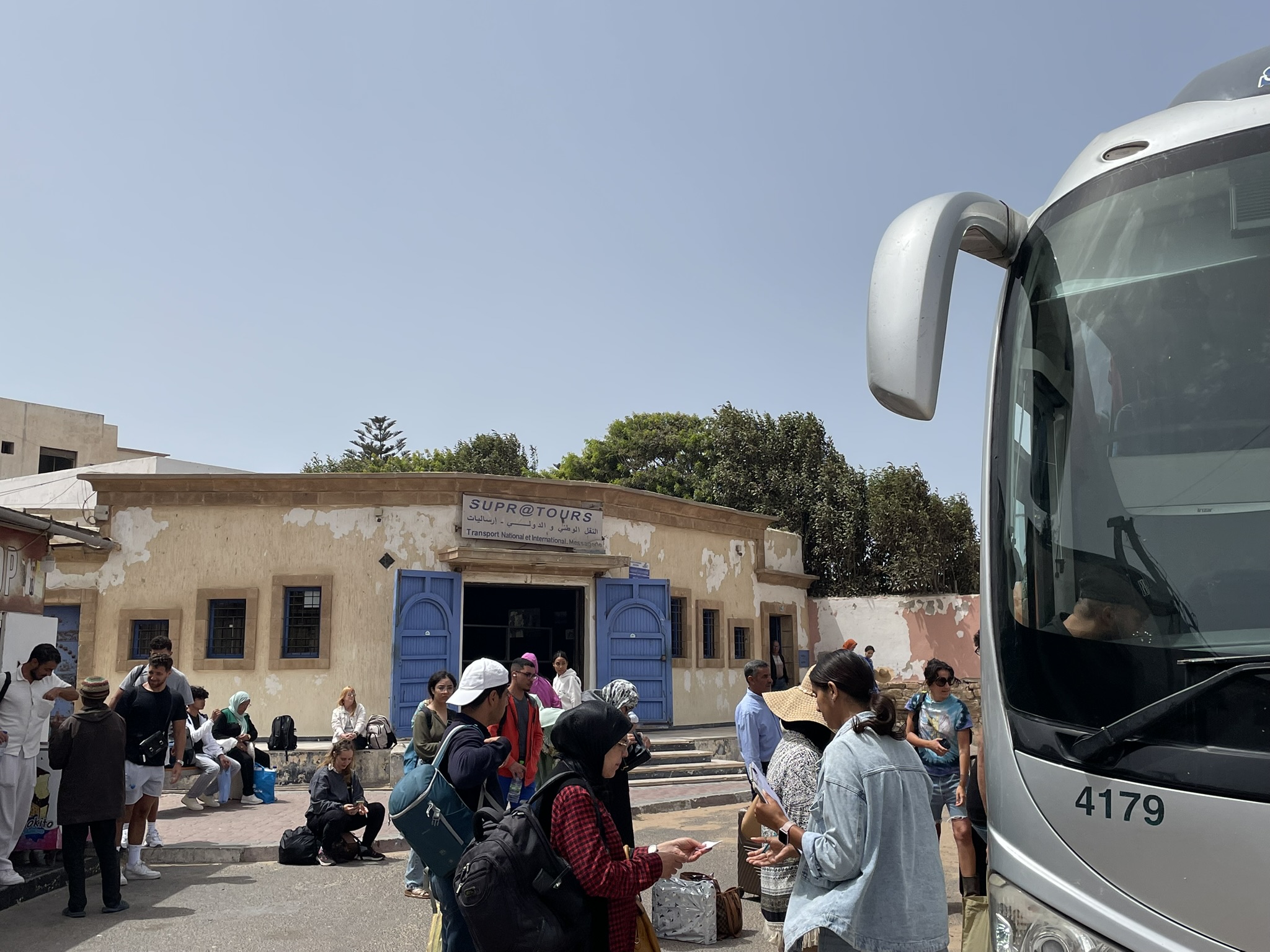
Buses arrive at and leave from just outside the southern wall of the Medina, at a facility significantly smaller than the one in Marrakech. Same rules apply for the bag fee and the stop en route is at the same roadside café – so, only about an hour into the journey.
Dining & Entertainment
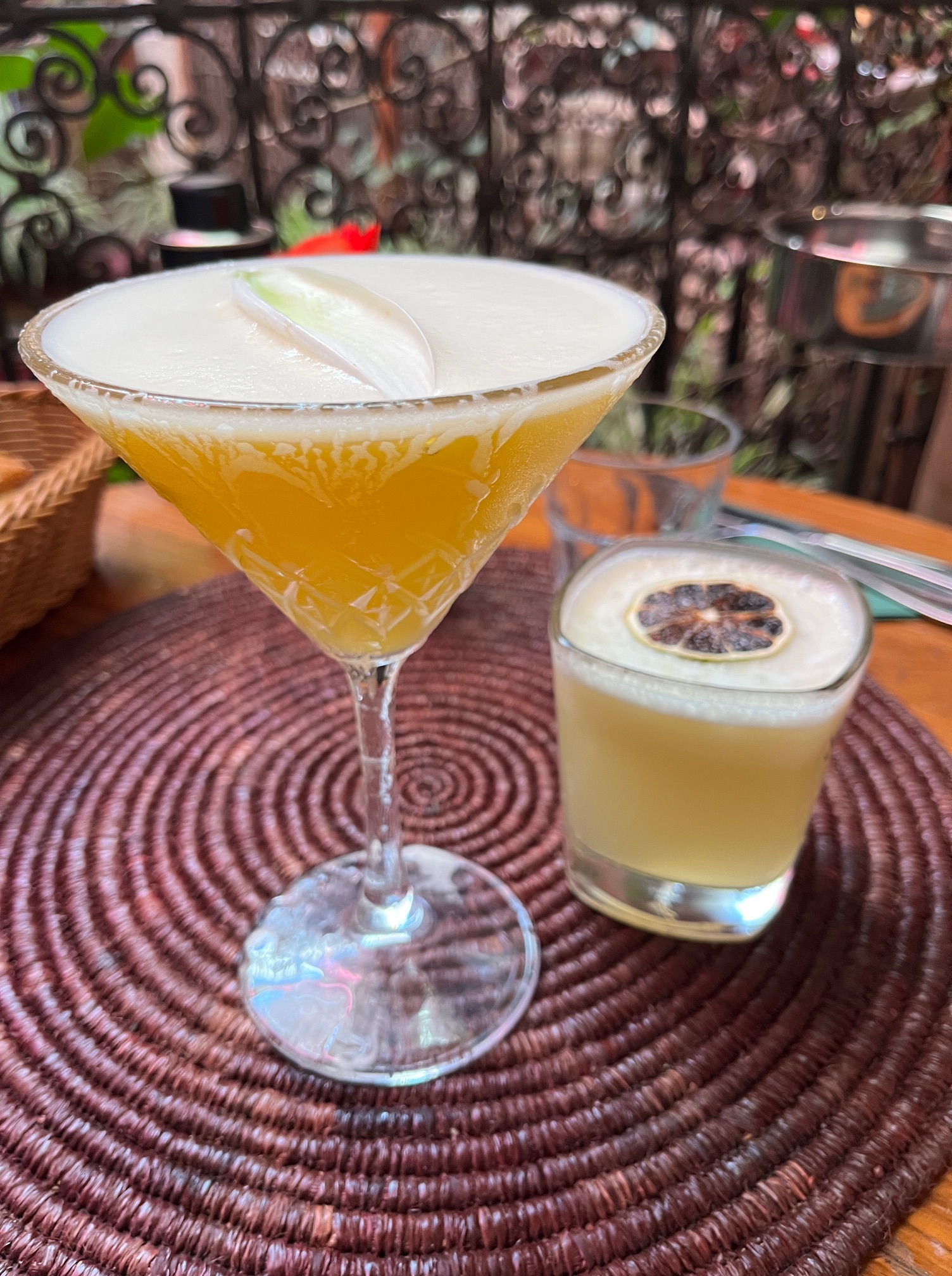
Do not miss Dar Baba on Rue Marrakech. In fact, it’s probably best not to go there to eat or drink first as you may not want to try anywhere else. A relaxed atmosphere spreads across a couple of eclectically furnished floors. The tapas-style food and cocktails are sensational, the staff are friendly and attentive, and when you return – as you probably will – do not be surprised if you’re welcomed back like an old friend.


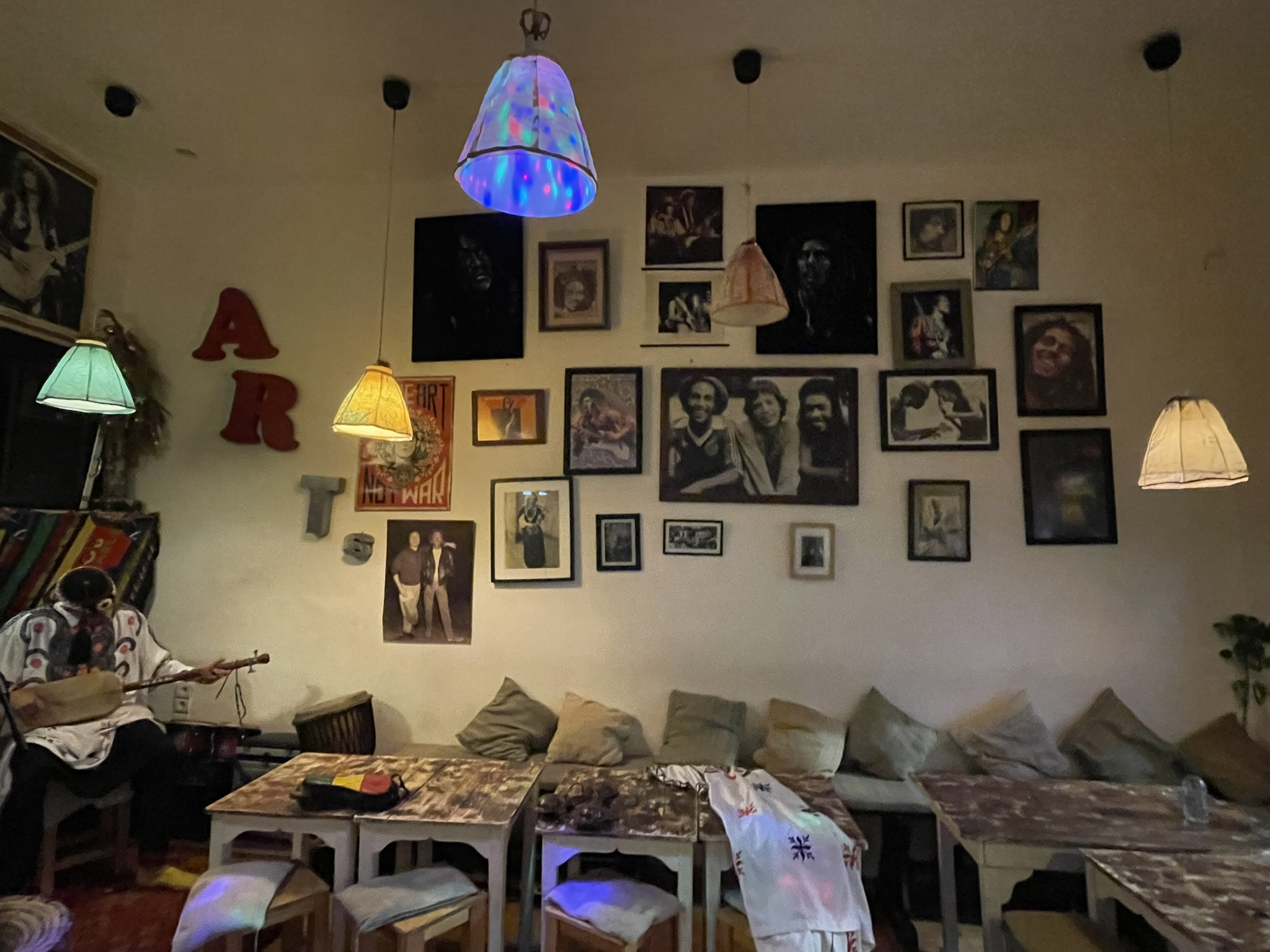
For live music, try La MaMa, upstairs in the Chrib Atay square.

You may also like:
A few days in Marrakech


 Journeys And
Pingback: A few days in Marrakech | Journeys And