
During the weeks leading up to our visit to Morocco, I experienced the usual dilemma that precedes all of our travels. To be better prepared for the journey ahead, do I immerse myself in learning about the country, its culture, what to see, what to do? Or should the forces of chance and luck and the haphazard drift of events be our guide?
The truth is, as much as I have tried to convince people – primarily me – that spontaneity directs my every move, the thought of ceding control to anything so random as haphazard drift feels more like an existential threat than a gateway to adventure.
Having again briefly flirted with the possibility of being impulsive, I ended up where I always do – somewhere between the two extremes. A place I like to call “planned spontaneity.”
There were a couple of other factors at play, too.
Firstly, I’m thirty years older now than I was at the “height” of my spontaneity. The chances that any opportunity to “go with the flow” will coincide with having the energy to actually go with it are significantly more remote these days.
Secondly, we were – purposely – not heading into familiar territory. The pursuit of different was an intentional and integral part of the journey. As Mark Twain wrote in The Innocents Abroad: “We wanted something thoroughly and uncompromisingly foreign – foreign from top to bottom – foreign from center to circumference …”
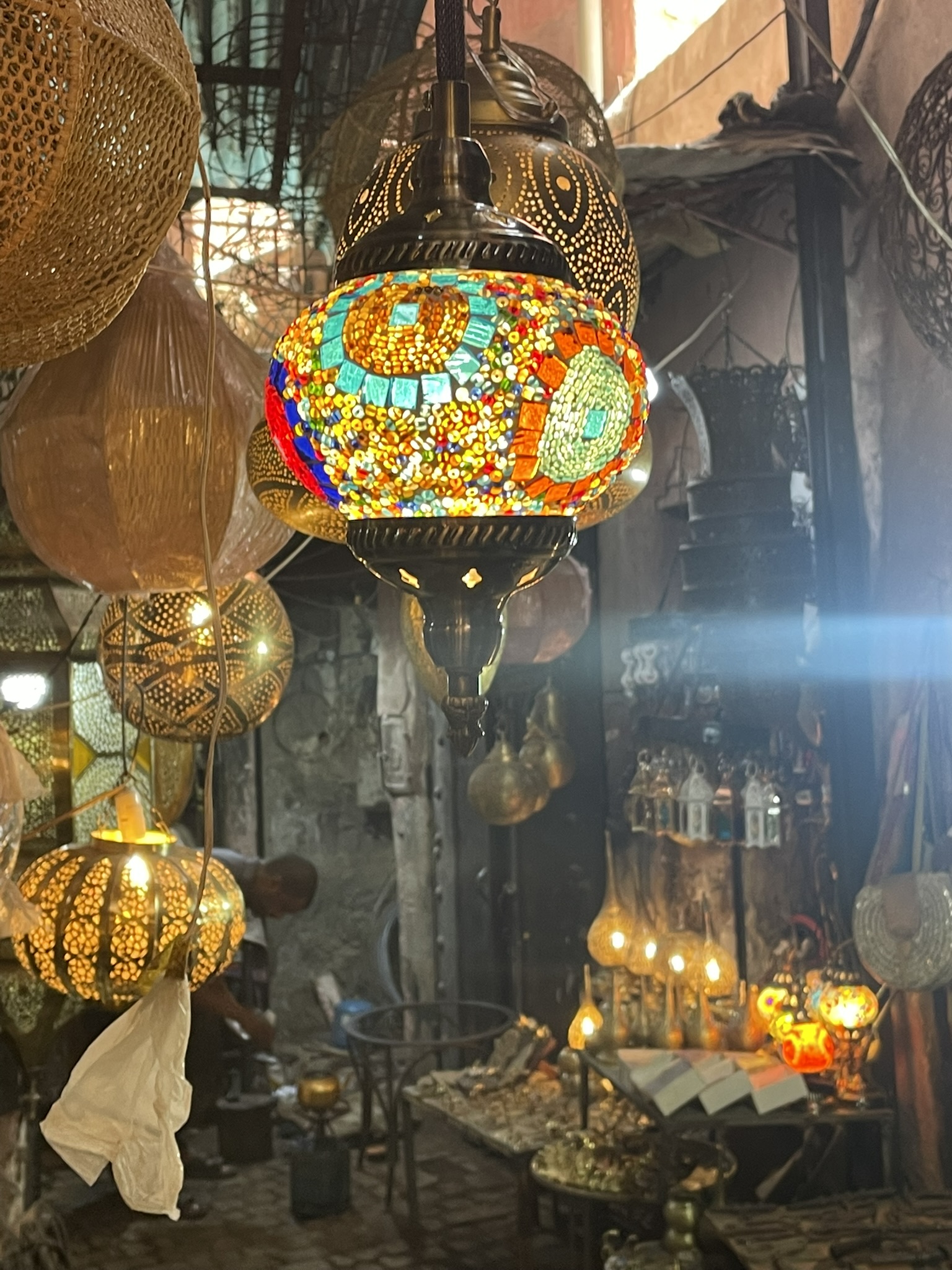

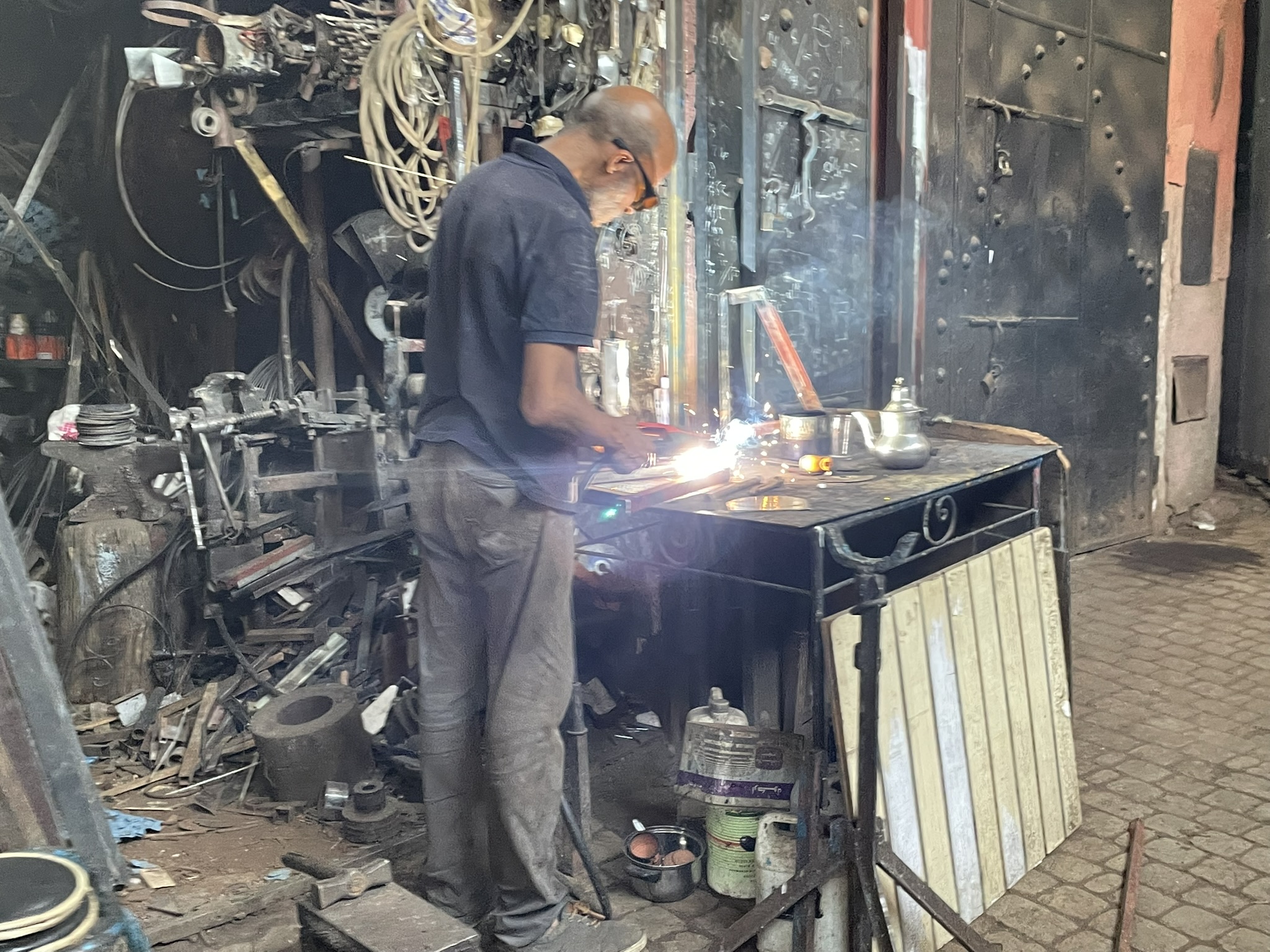
If, like Mr. Twain, we were to find this in Morocco, it was probably going to be a good thing to know a bit about the place before we arrived.
Just a few days before we were due to depart, there was one particular article that caught my attention. In it, the writer described his experiences along a circuitous route around the country. Of Marrakech he wrote: “If you’re not lost within a minute, you’re not trying hard enough.”
We were soon to discover there was no hyperbole in the statement.
– – –
We arrived in Marrakech twice in three days.
The first was only for an overnight stay. Although we were inside the Medina, Riad Zebrakaro was barely 200 yards from its walls. Even our jetlag-addled brains had difficulty getting lost.
A couple of days later, we returned for a longer stay and a chance to immerse ourselves in the sensory thrills of the city.


We had made arrangements with Riad NaaNaa – our accommodation for the next four days – to be picked up from the bus station and taken to the property. Arriving at a Medina gate, a porter loaded our bag onto a cart and, as we struggled to keep up, he proceeded to careen between market stalls and down narrow alleyways, never yielding passage to a seemingly impenetrable throng of humanity or to the constant steam of mopeds – and occasional donkeys – coming in the other direction. We eagerly filled the temporary void his cart created.
As we progressed, I tried to commit our route to memory and – more importantly – work out how to do it in the other direction. It was a futile exercise. Less than halfway through, I gave up entirely and just blindly followed as the porter, his cart, and our bag disappeared around yet another corner.
Finally, after what seemed to be considerably more time than the ten minutes it actually lasted, there were no more corners. We had reached the riad that would be our home for the next few days.
And that brief introduction had made our decision to pre-book a personal guide to the Medina for the next day feel prescient.
Amid was a truly exceptional guide. He listened attentively as we listed the places we were interested in visiting and wove them into a tour of the Medina that was entertaining and informative. With enthusiasm and pride in his city, Amid navigated us around the Medina, its central souqs, and its landmarks – sharing an insightful perspective of Marrakech’s rich history and culture.
But there was one other thing – relatively minor, easy to dismiss – that, for all of the history lessons, helped us to better appreciate the vibrancy of our surroundings.
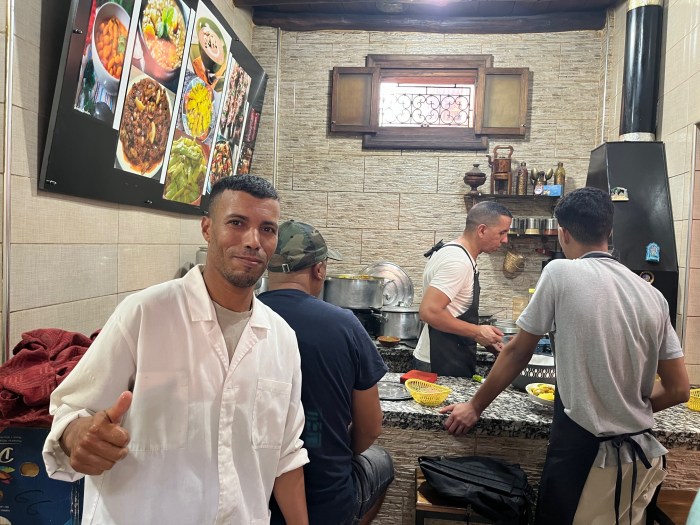
Amid suggested that we stop for lunch at a small Medina food stall. If we had not been with him, I doubt we would have even noticed its existence. It was a joyous experience; one of those rare examples encountered during a journey when you know, in that precise moment, you will remember it forever.
Perched high on unsteady stools around a similarly rickety table, we enjoyed one of the best meals we had during our entire stay in the country. The taste of the food has faded now, but the energy, friendliness, and simple joie de vivre of that place live on.
For the next few days, confident that a guided, six-hour walking tour had turned us into Marrakech Medina messiahs, we strode undaunted into its maze. After all, we could now find our way back to our room without GPS assistance. We could now … well, that was about it.
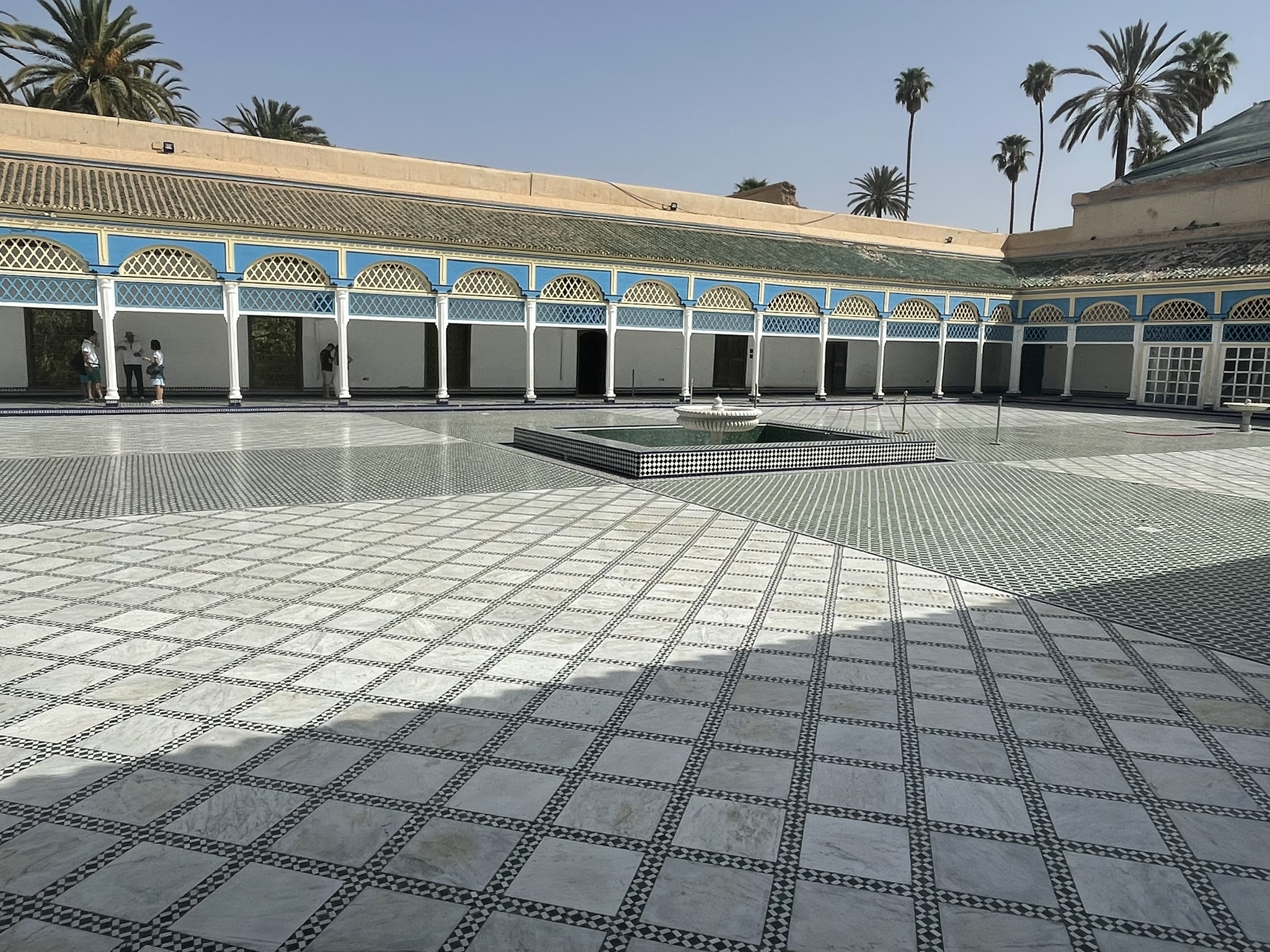


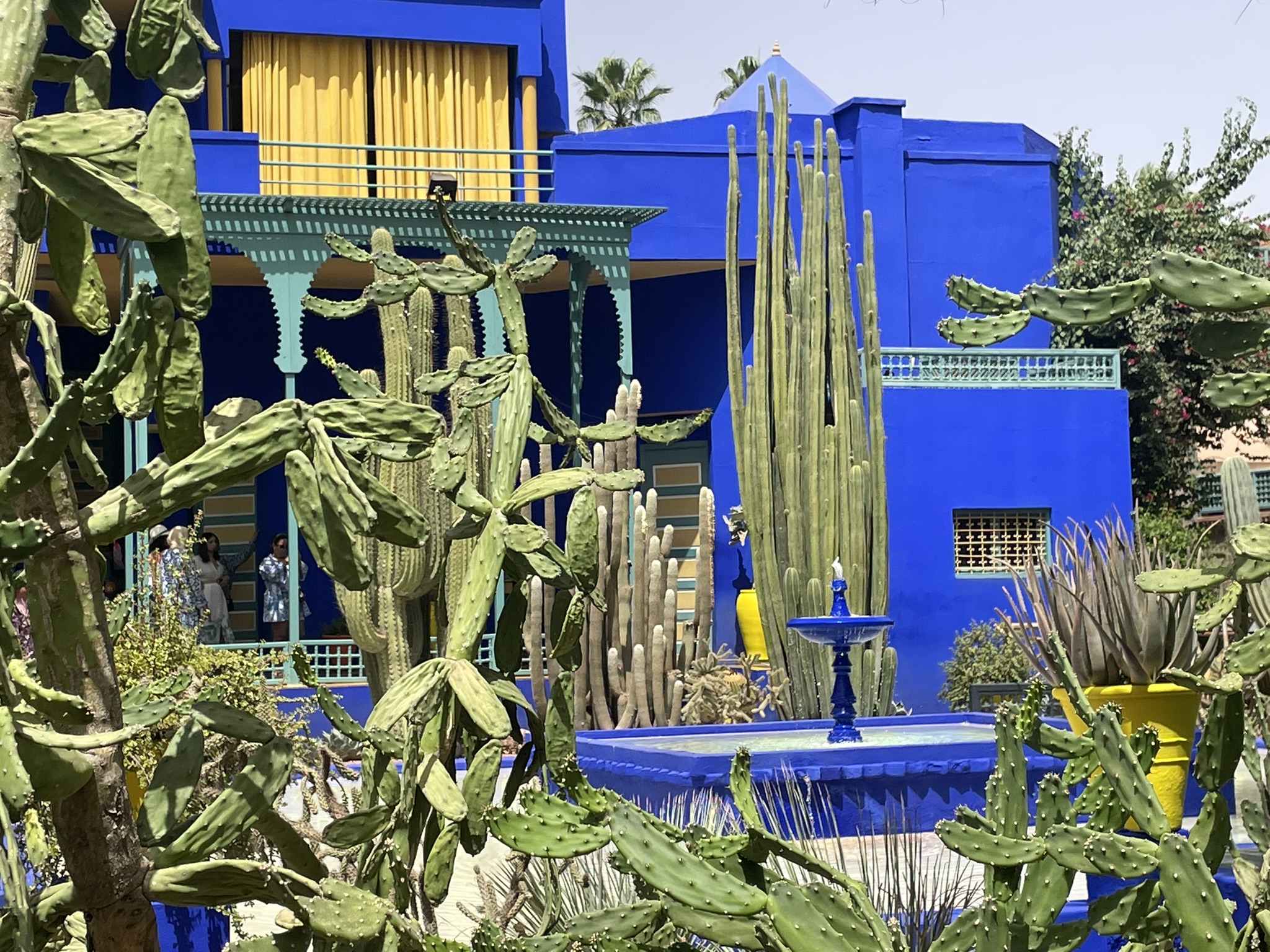

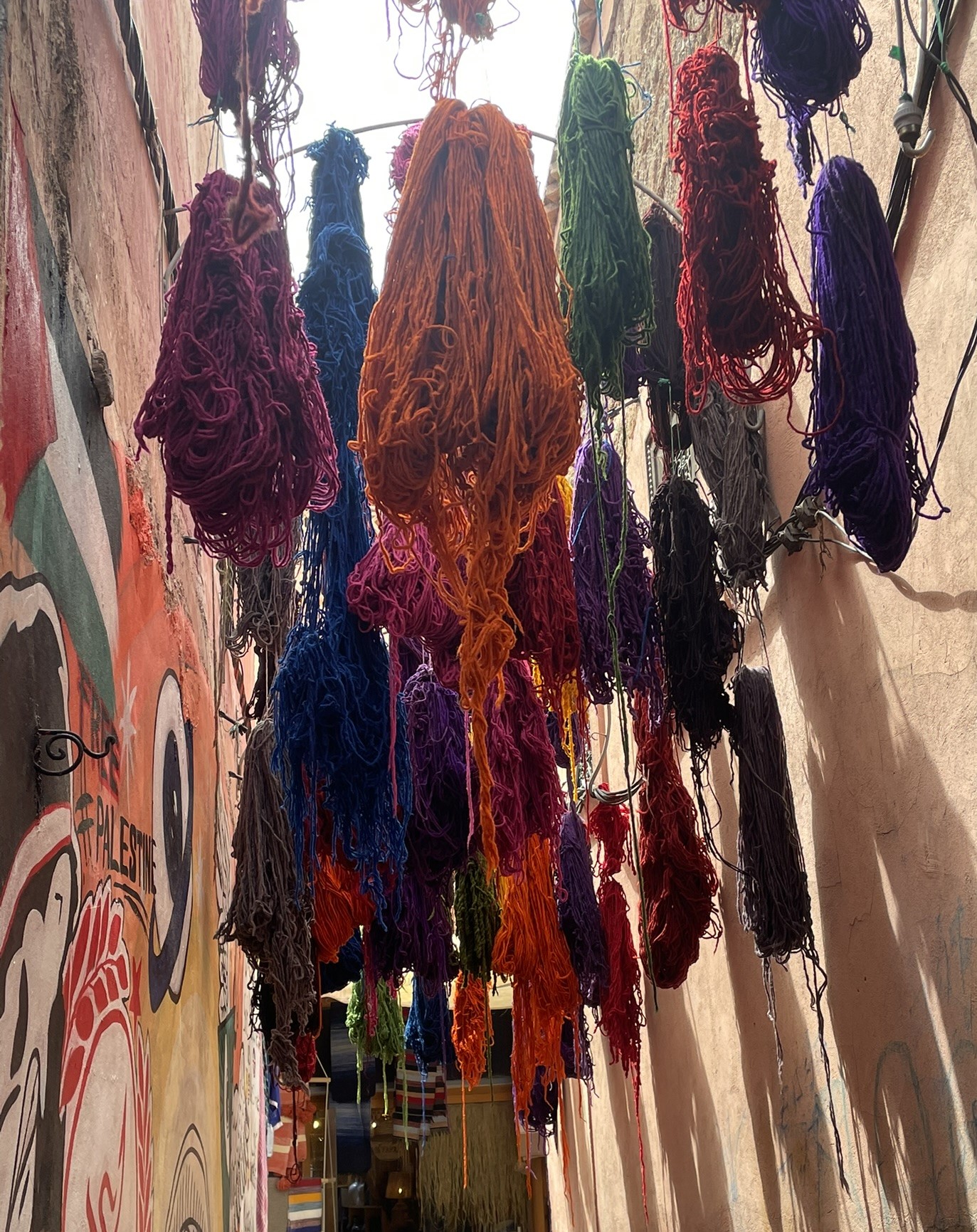
We quickly discovered that the Medina is not one big maze. The central souqs form a series of mazes – some connected to others, some not – all of them able to disorient even the soundest sense of direction. After a few days we did start to recognize turnings and landmarks, but I remain convinced that, every night, the locals engage in covert operations that constantly change what lies around yesterday’s familiar corner.
By our last full day in the city, we felt fully at ease.
Having explored most of the Medina and its principal places of interest, we were now taking impulsive turns down passageways we would have actively avoided just two days before. My wife’s advancing negotiation skills had struck some pretty impressive bargains from local stall keepers. We knew this place.
And therein lies the cautionary tale.
As a standard, Moroccans are friendly, disarming, and genuine. However, as in any big city, there will be occasions when you’ll encounter someone who is not – and it is very easy to allow perceived familiarity with your surroundings to create complacency. It is a dangerous combination, but that is exactly what we did.
Ignoring the skeptical voices screaming in our ears, we trusted and followed a stall owner who insisted he could show us a quicker way through the Medina to Djemaa El Fna.
It wasn’t. Of course.
On the plus side, once we had finally recognized the scam and nursing a couple of bruises to our seasoned travelers image, we also realized that the five-euro bribe to extricate ourselves from the situation was a fortuitous outcome. It could have been a whole lot worse.
As we left Marrakech and headed towards the Atlas Mountains and the desert beyond, I reflected on our time in the city. To the unsuspecting, unprepared visitor, I could see it would be easy to be so intimidated by the general chaos of the Medina that the idea of exploring it could become paralyzing. To give in to that fear would be to miss out on its perpetual energy, on its intoxicating atmosphere – and on the opportunity to truly experience “something thoroughly and uncompromisingly foreign.”
We had explored. We had engaged. We had experienced. It was another victory for planned spontaneity.
Nick Orchard
19th January 2025
Practicalities
Navigating the Medina
- Take photos of the outside of your accommodation and, if staying in a Riad, a photo of its intersection and/or any nearby fixed landmark.
- On your first trip into the Medina, look behind you and take photos facing that way. To find your way back it’s essential to know what you need to head back towards looks like.
- If you’re expecting to return late in the evening (after 21:00), do not use market stalls as landmarks. They will be shuttered by the time you make your way back and the passageway they’re on will look completely different.
Accommodation
There are a multitude of great places to stay in the Medina. We’ve stayed at two.
Riad Zebrakaro: On the northwest side of the Medina. Quiet location close to a main passageway through the Medina. 15-minute walk to Djemaa El Fna. Approximately 200 yards from a Medina gate. Taxis from there take about five minutes to the main bus and train station. Cost is around MAD20 (USD2).
RiadNaaNaa: Just about as close as you can get to the geographical center of the Medina. Small pool inside is a nice place to dip your feet after a long, hot and sweaty day exploring the city.
The Riad check-in experience is something of a ritual and a perfect introduction to the hospitality and friendliness you’ll find throughout Morocco. Expect to be invited to linger over mint tea – poured extravagantly and always with pin-point accuracy into a small glass – while your host provides information about the Riad and the Medina.
Arranging a Medina Guide
Guides can generally be arranged with your accommodation. It is best to reserve before you arrive. I thoroughly recommend Amid. Check his availability here: 2025 Guided Excursion in the Souks of Marrakech provided by Amid. Email bensasi@live.com; Phone +212 (0) 6 50 81 96 07.
Cooking Classes
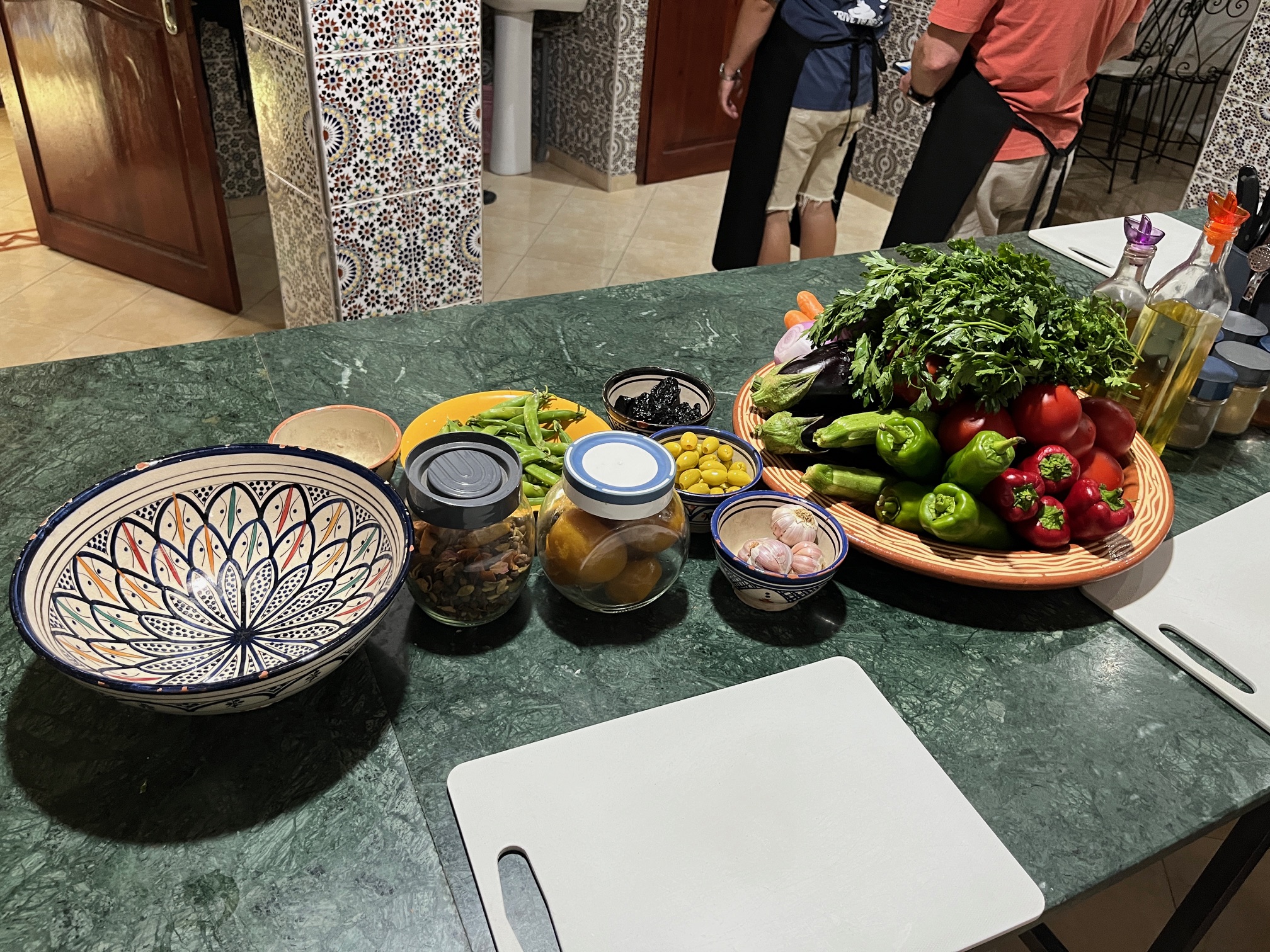
For a different way to enjoy the tastes and aromas of Marrakech, take a cooking class. Many places offer classes twice each day. Those in the morning often include a visit to a Medina market stall to buy vegetables and other ingredients for the meals you will prepare and cook. The afternoon classes sometimes do not include this visit. Check to be sure. Also check the maximum number of participants each class accommodates. The smaller the number, the better the experience, and the more you’ll be involved.
We took this one. Highly recommended. Cost around USD35 per person.
Marrakesh cooking class with chef Hassan – Local dishes 2025 – Marrakech

You may also like:
A few days in Essaouira


 Journeys And
Pingback: A few days in Essaouira | Journeys And